
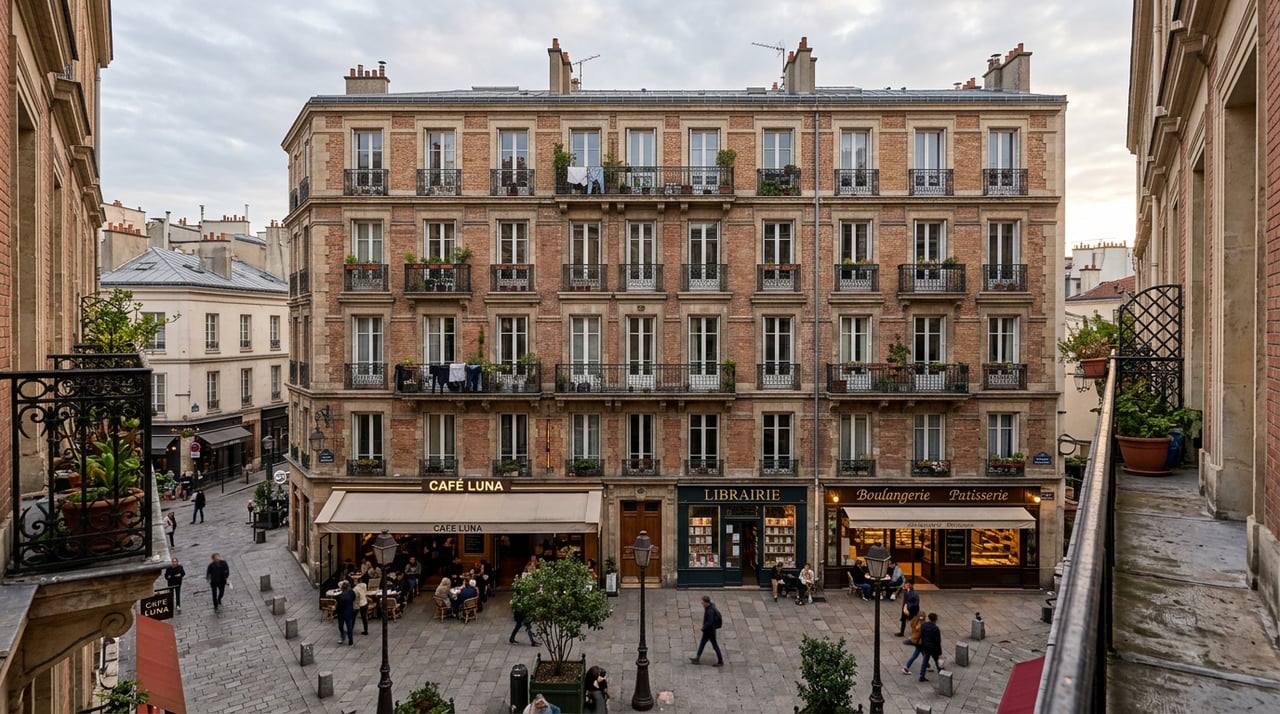
Buy a cocktail at Denver Pavilions and carry it across 16th Street to the other sidewalk, and you have technically broken the law. Glenarm Plaza's outdoor drinking zone splits into two halves at the transitway, and the rule that governs both sides is specific: a to-go drink purchased on one side has to stay there. Cross with it and you are outside the designated zone. Most people walking through Upper Downtown right now have no idea that boundary exists, which says something about how quickly this corridor has changed and how little of that change has actually settled.
The one-year mark for 16th Street's reopening lands on October 4. A three-and-a-half-year, roughly $176 million reconstruction wrapped last fall, and the corridor dropped "Mall" from its name in the process. That anniversary is worth marking, but the more useful thing for anyone who lives near this street to know is that the block containing Denver Pavilions is already lined up for its own separate rebuild, a bigger one, while the rest of the corridor stays finished. The street just closed one long construction chapter. Two blocks of it are about to open a new one.
What "Finished" Actually Looks Like Right Now
Most of 16th Street today is genuinely done. The transit lanes moved to the center of the corridor, wider pedestrian zones opened up on either side, and the city planted enough new trees to expand the canopy by roughly a third. Five new play features are scattered along the route for anyone walking it with kids:
- The Nest, a climbing structure at 16th and Glenarm Street
- Fallen Leaves, a sound-producing play feature between Arapahoe and Curtis streets, near Rock Bottom Brewery
- The Beehive, a children's climbing structure between Larimer and Lawrence streets
- Howdy Trouty, three climbable trout sculptures between Market and Larimer streets
- Grasslands, a seating area with prairie grass-inspired forms between Court and Cleveland places
Glenarm Plaza itself has become the city's first designated common consumption area, meaning restaurants there can sell a sealed to-go drink that customers carry and finish within the marked zone, open from 10 a.m. to 10 p.m. most days. It launched in the summer of 2025 with six participating businesses and has stayed one of the few visible signs that this stretch of downtown is trying to feel like a neighborhood again rather than a commuter route.
New businesses have followed. Otra Vez Cantina reopened at 610 16th Street this spring, and Mendocino Farms opened a location on the corridor around the same time, according to the Downtown Denver Partnership's spring foot-traffic tracking. That tracking also showed something worth sitting with: 16th Street's average daily activity rose 13 percent in April 2026 compared to April of the year before, adding roughly 24,000 more total visits to the corridor that month alone. More people are walking through. Whether that has translated into more storefronts filled is a separate question. As of last fall, the Downtown Denver Partnership put citywide ground-floor retail vacancy at 16 percent, a number that measures the whole downtown, not just this one street.
One longtime visitor summed up the change for Denver7 around the reopening:
"Now it seems people have a reason to stop and sit."
That's the honest read on the finished portion of the street. It works better as a place to be than it did a year ago.
Why It Took Longer Than Anyone Promised
The finished part of the corridor did not get finished on schedule, and a city audit released last month explains why in more detail than most residents probably wanted. The project was supposed to wrap by late 2024. It didn't reopen until October 2025, nearly a year late, and it came in more than $27 million over its original $149 million construction budget.
The reason is not simply bad luck underground. According to the Denver Auditor's report, one of the three qualified contractors who considered bidding on the project withdrew specifically because of utility risk on the site. The city proceeded with the remaining bidders without fully investigating that risk. In May 2022, crews hit exactly what that contractor had worried about: an active brick sewer system dating to the 1880s that the city had never mapped and still has no plan to systematically replace. Fixing around it added close to a year to the timeline and roughly $18 million to the contract, a change order the audit found was approved without ever going back to city council for review. The same audit noted the city waived more than $1 million in contractual damages for missed deadlines, saying officials wanted to preserve the relationship with the contractor doing the work.
None of that changes what the street looks like today. It does explain the extra year of torn-up sidewalks and detoured buses that anyone who lived through it remembers, and it is a reminder that "finished" here came with a cost that outran the original plan by a wide margin before it ever got close to done.
The Next Rebuild Is Two Blocks Away, Not Ten Years Off
The stretch most likely to look like a construction zone again is not somewhere new. It's Denver Pavilions itself, the three-level shopping center that anchors 16th Street between Welton and Tremont. The Downtown Denver Development Authority bought the property in late 2025 for roughly $45 million, most of it going toward the purchase with a smaller share set aside for near-term repairs. This spring the authority committed another $5.2 million just to fix the parking garage and roof, a project expected to take about eighteen months with half the garage staying open throughout.
That was the stopgap. The bigger plan came in April 2026, when a ten-person advisory panel from the Urban Land Institute spent a week studying the property and recommended something more drastic than a facelift: demolish three of the four existing buildings, keep the movie theater for retail and performance space, and build a public plaza surrounded by two residential towers holding roughly 1,200 housing units total. The estimated cost for that version of the project runs between $500 million and $615 million, and it would most likely be developed privately rather than funded the way the street rebuild was.
Kristen Morris, president of the Atlanta-based development firm Morris & Fellows and one of the panelists, put the reasoning plainly, saying it was time to "close this chapter and start the next."
None of this is locked in yet. The ULI panel is an independent advisory body, and Denver isn't obligated to follow its recommendations. Panel organizers said in April 2026 that the full written report would reach the city within about two months of the presentation, and a project this size, with financing this uncertain, realistically takes years to move from recommendation to groundbreaking. But the direction is clear enough. Upper Downtown, where the Pavilions sits, had a vacancy rate near 40 percent in 2025, a figure specific to that stretch rather than downtown as a whole, and it's the reason the city stepped in and bought the property instead of waiting for a private buyer.
What This Means If You Walk This Street Every Day
The practical takeaway for anyone who lives near 16th Street is that the corridor now has two different clocks running on it at once. The stretch from roughly Union Station down through Glenarm Plaza is done for the foreseeable future. The play features, the tree canopy, the drinking zone rules, all of that is settled infrastructure, worth learning if you haven't already, especially the part about not crossing the street with an open drink.
The Pavilions block is a different story. It's a holding pattern right now, a garage getting repaired while a much larger plan works through approvals that could take years to finalize. If you've been treating the whole corridor as one finished project since last October, it's worth knowing that one two-block stretch of it is functioning more as a placeholder than a destination, and the next visible construction on 16th Street is more likely to start there than anywhere else on the route.
Downtown Denver is still working through a shift from a retail-first business district to something closer to a neighborhood people actually live in, and this street is where that shift shows up first. The rebuild that just wrapped was never going to be the last one. It was just the one that happened to come first.
If you're curious how any of this is shaping demand or pricing for condos and lofts near the corridor, My Denver Team tracks LoDo and Riverfront Park closely and is glad to talk through what it means for your specific situation. Contact Us.


